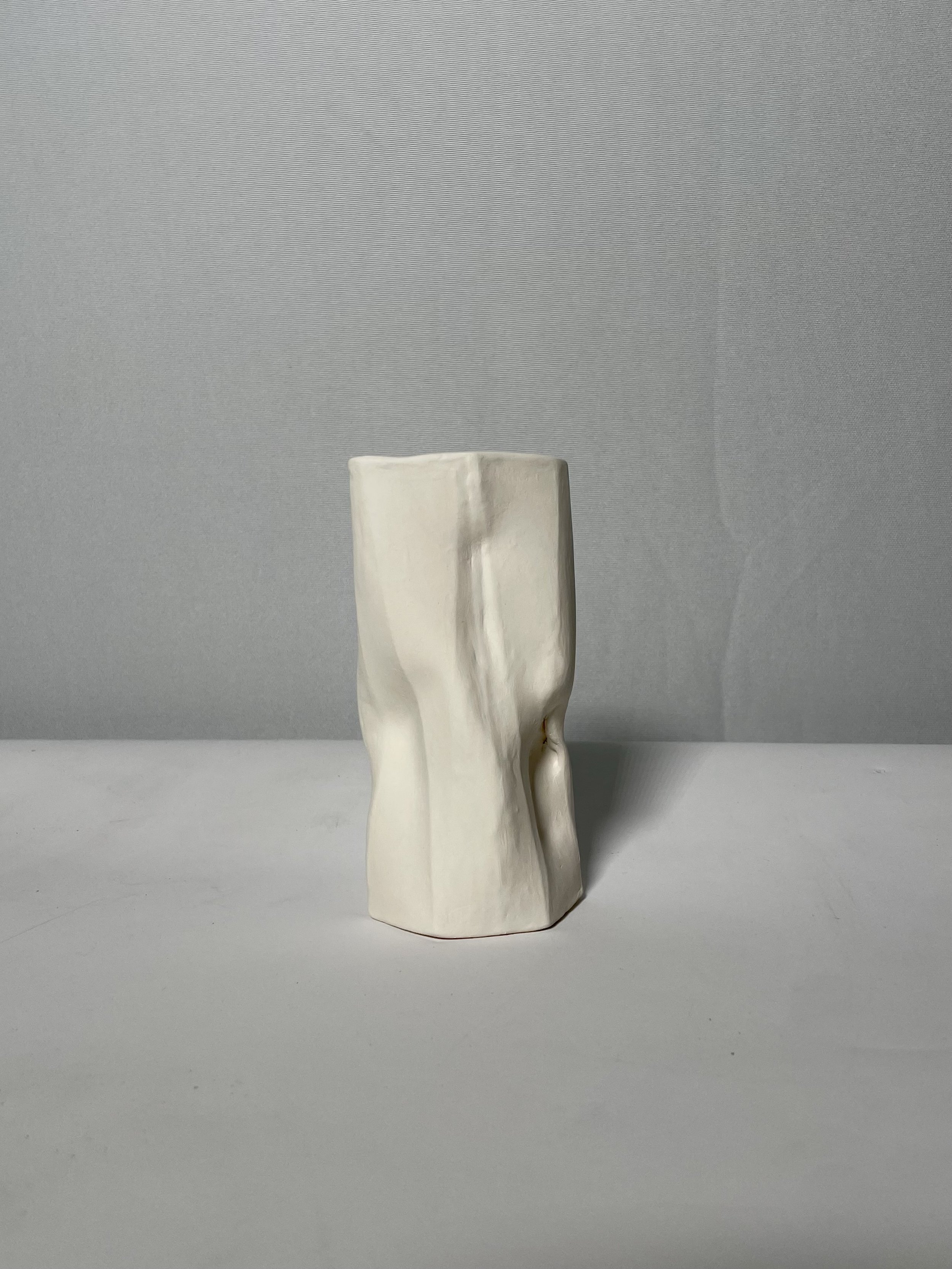
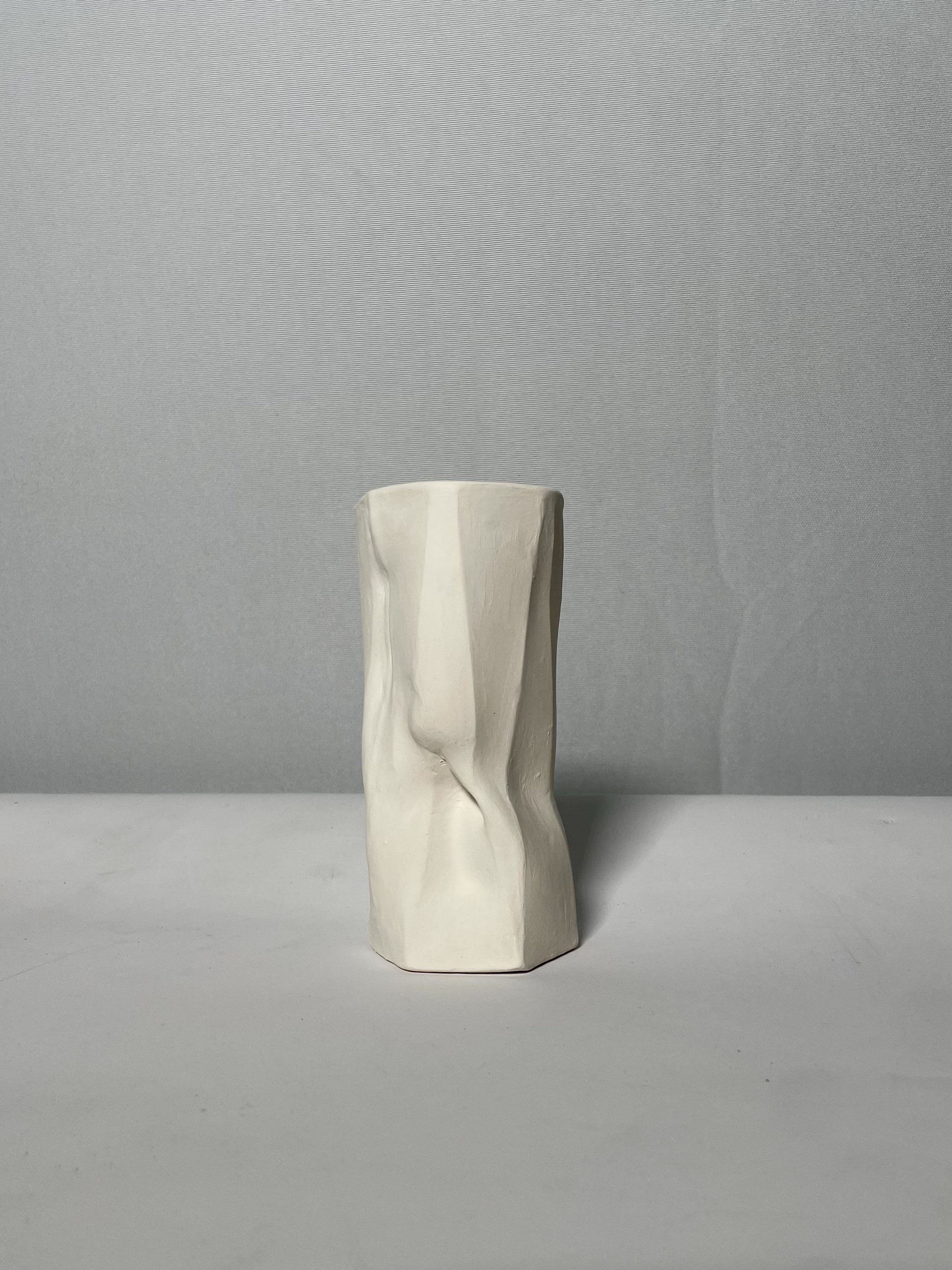
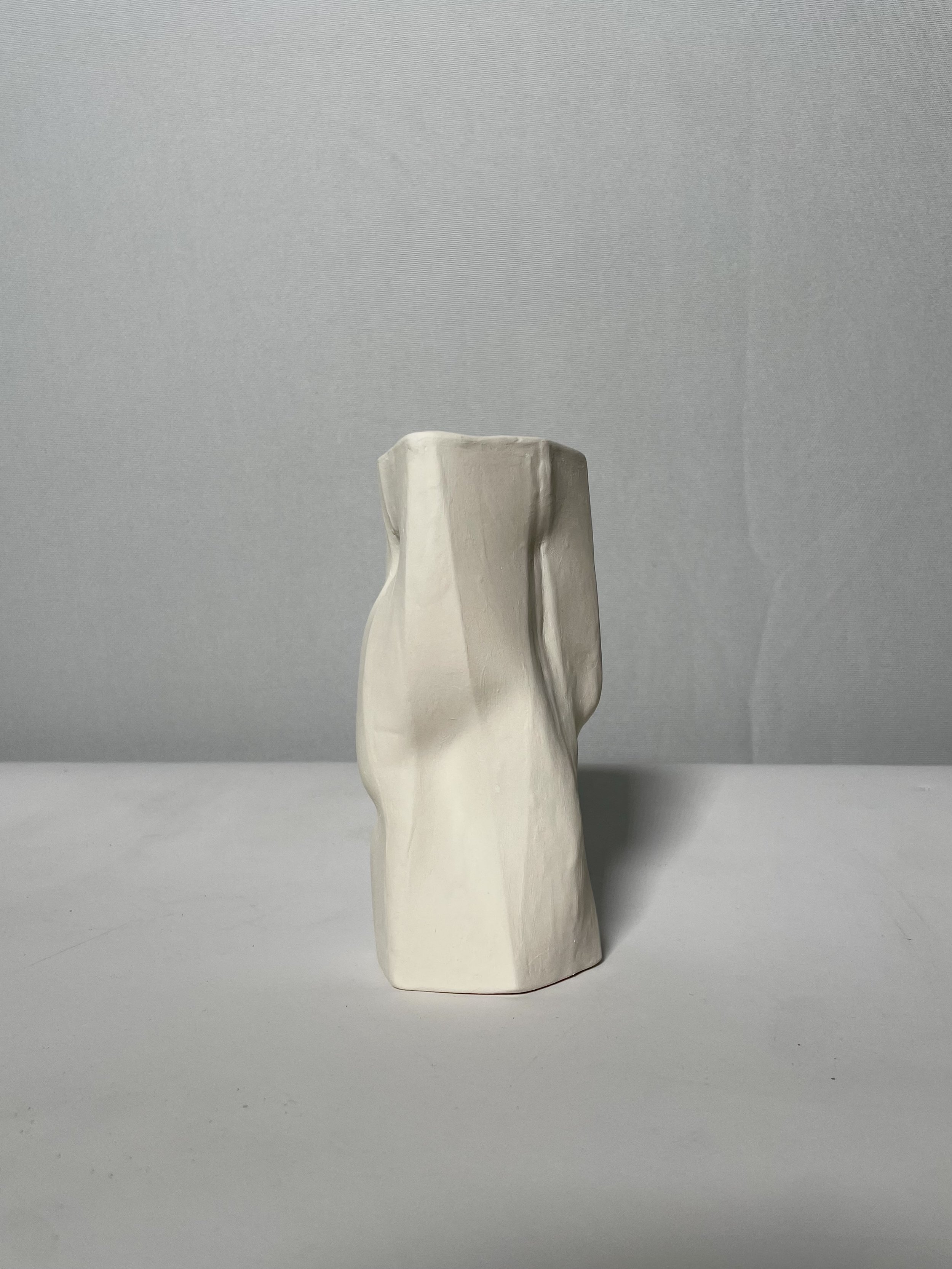
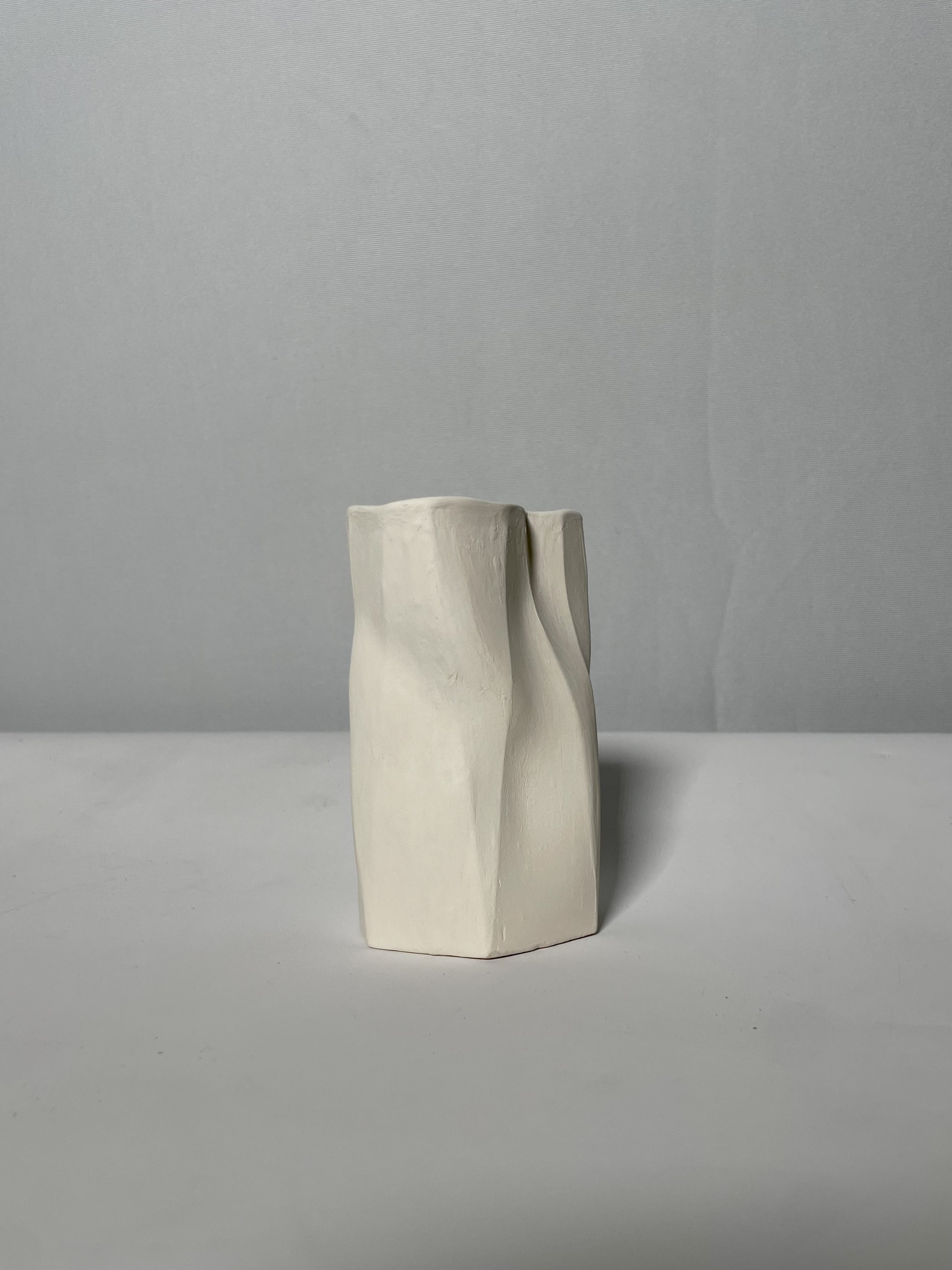
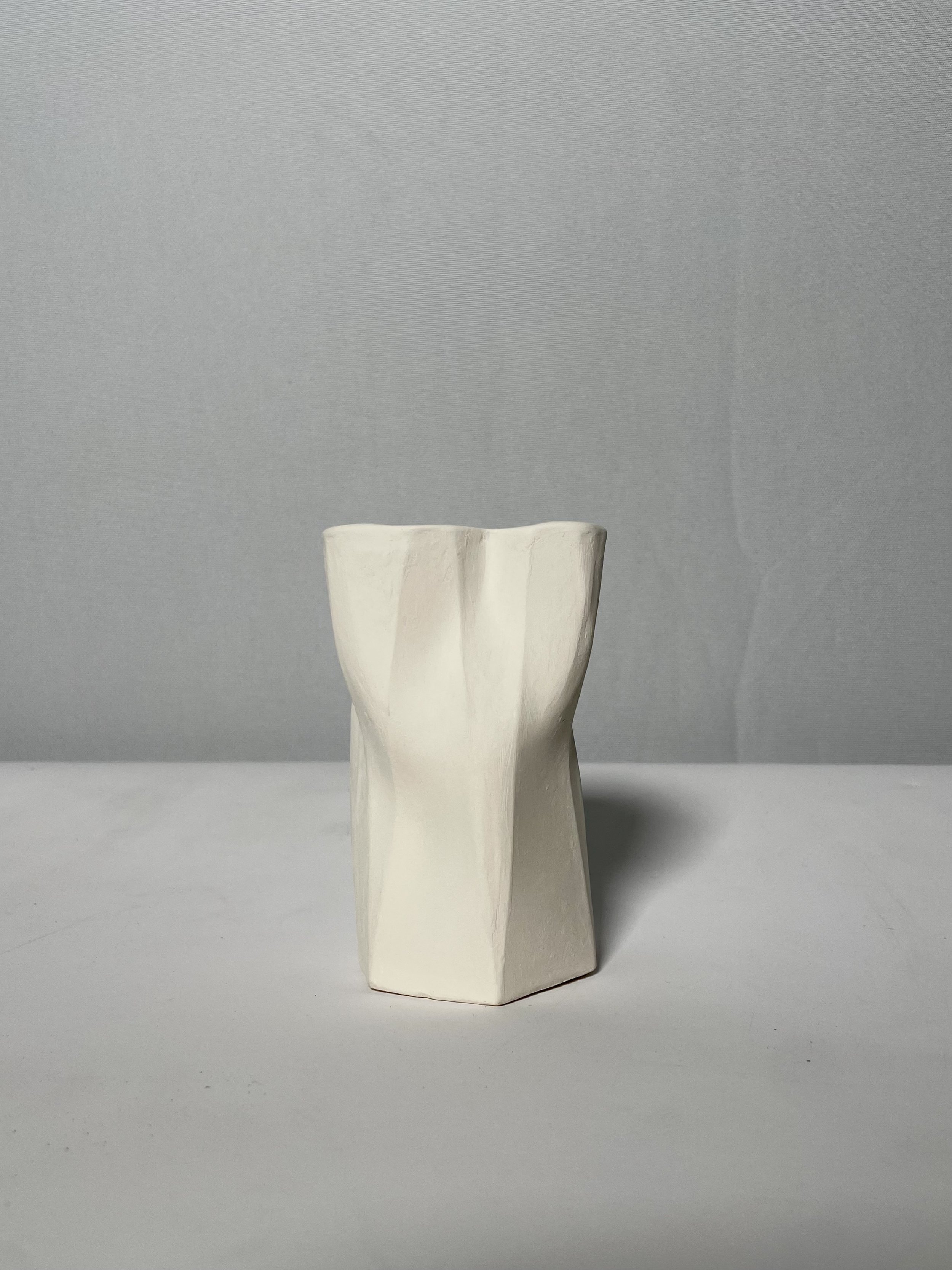
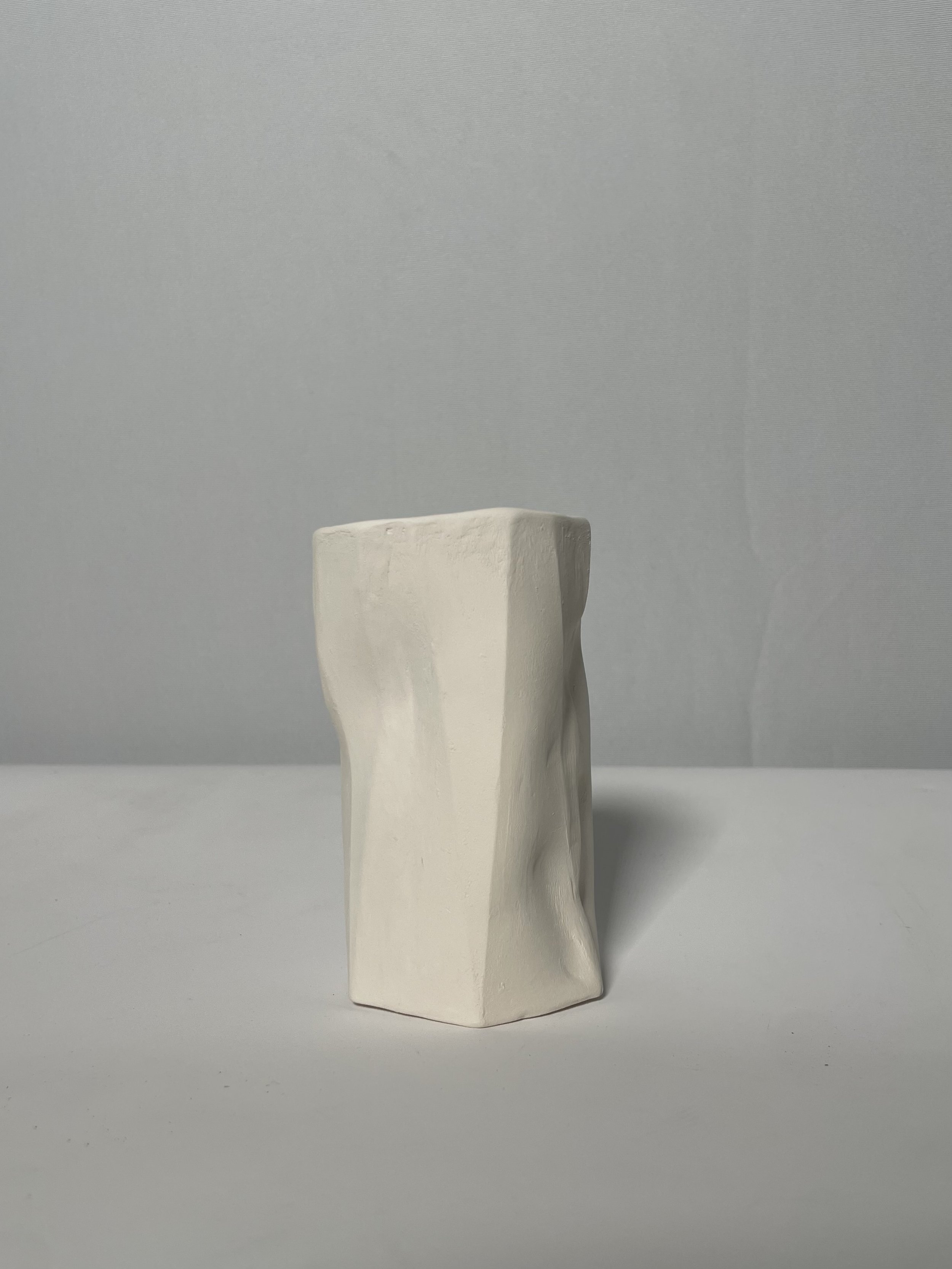
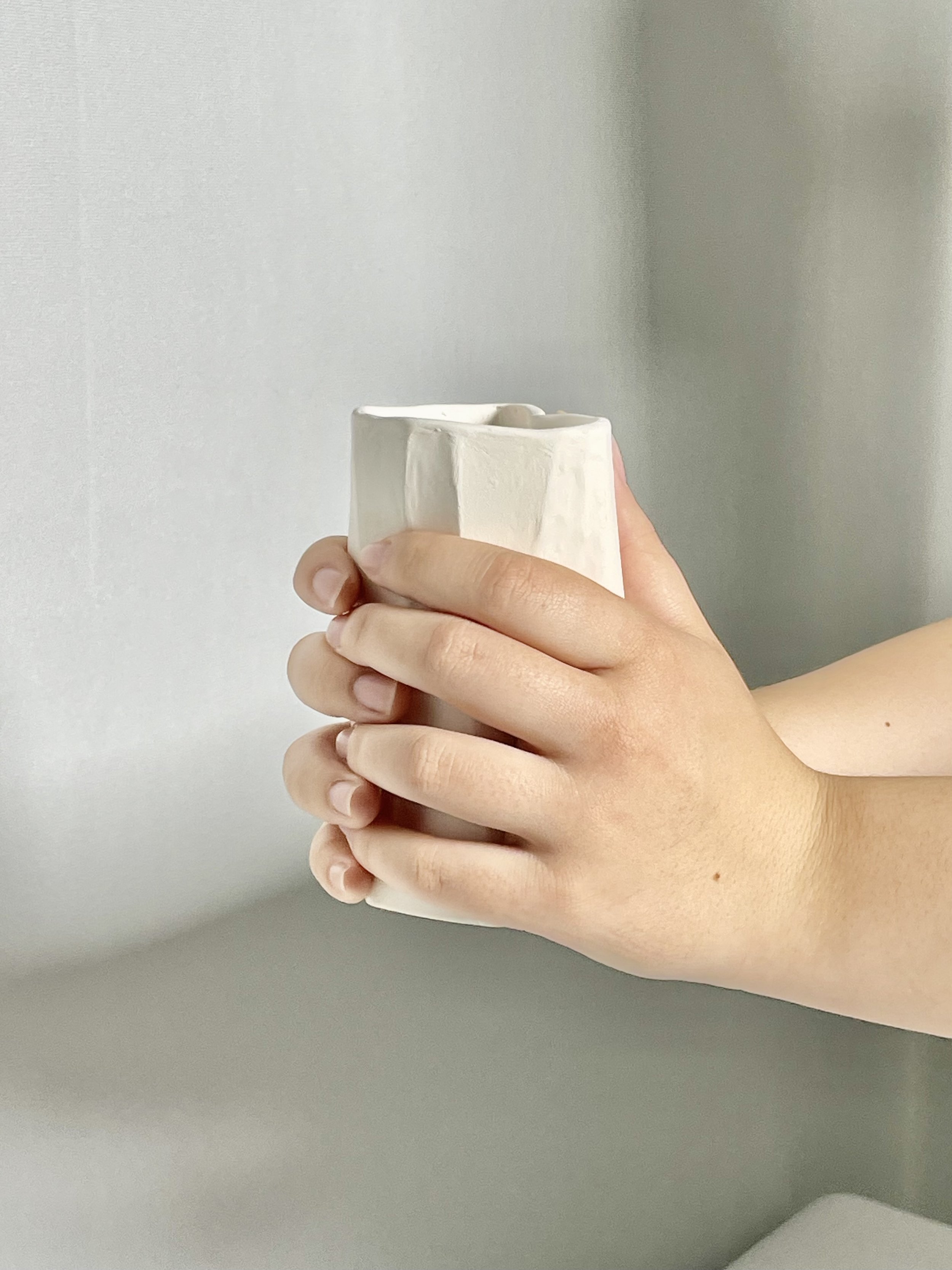
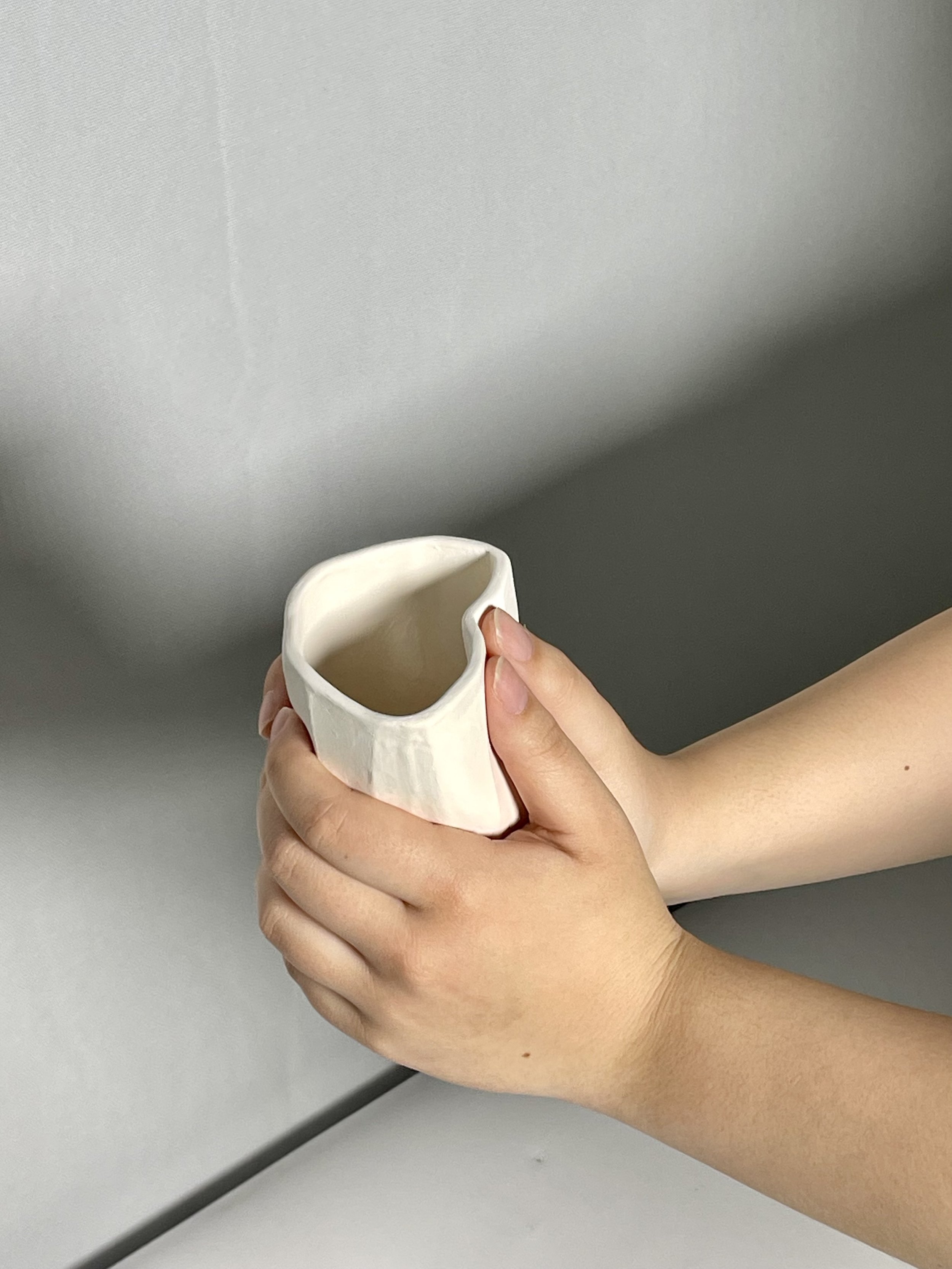
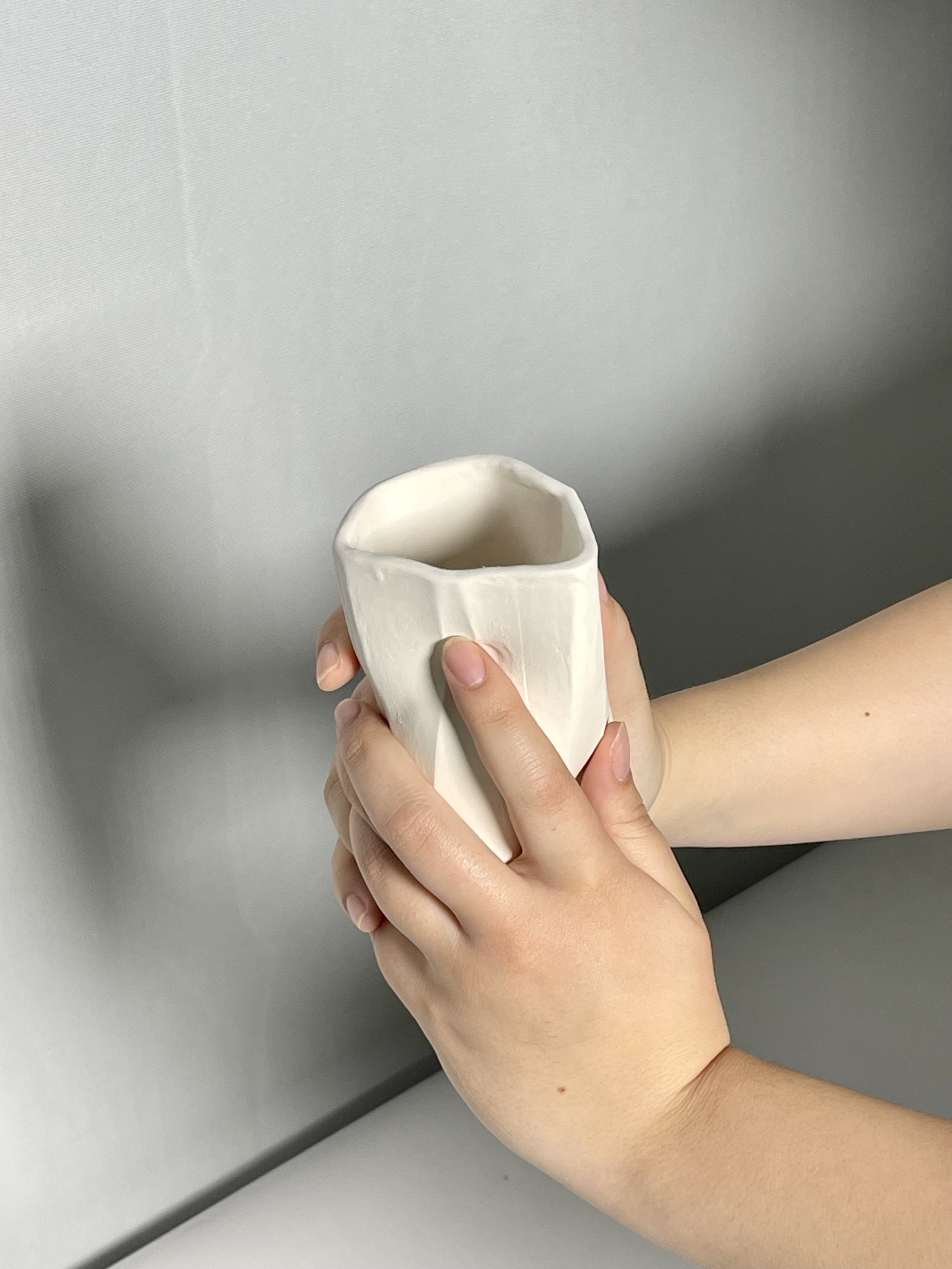
In the palm of your hand, 2024
Homesickness is a normal response to growing up and transitioning into adulthood and independence. The feeling, however, may not be tied simply to the literal home we inhabit, but to the routine embedded within it: the food we eat, the objects we use, the people who surround us, etc. What senses evoke these strongest feelings of memory and connection? How can they be utilised within the design of an object to cope with feelings of homesickness?
Touch is a necessary sense for survival and development, stimuli sensed and understood through the skin. More intimately, touch is a path of connection. Hugging, holding, or simply having someone near is crucial in building a bond and fostering emotional connections. The parent-child relationship is especially built upon a basis of touch and feel. What sort of memories are held within this feeling?
This project aims to offer comfort to those who are homesick as the imprints moulding the shape of the cups mark the trace of the creator. An everyday object able to fit naturally into daily routine, yet personal and intimate by its unique nature. As the user wraps their hand around the cup, they feel the imprint of the creator—whether that be mother, father, sibling, or whoever reminds them of home. It acts as an exchange: something that could be made together and swapped. As a subtle and somewhat subconscious connection, it provides a sense of comfort and ease through the feeling of touch.